
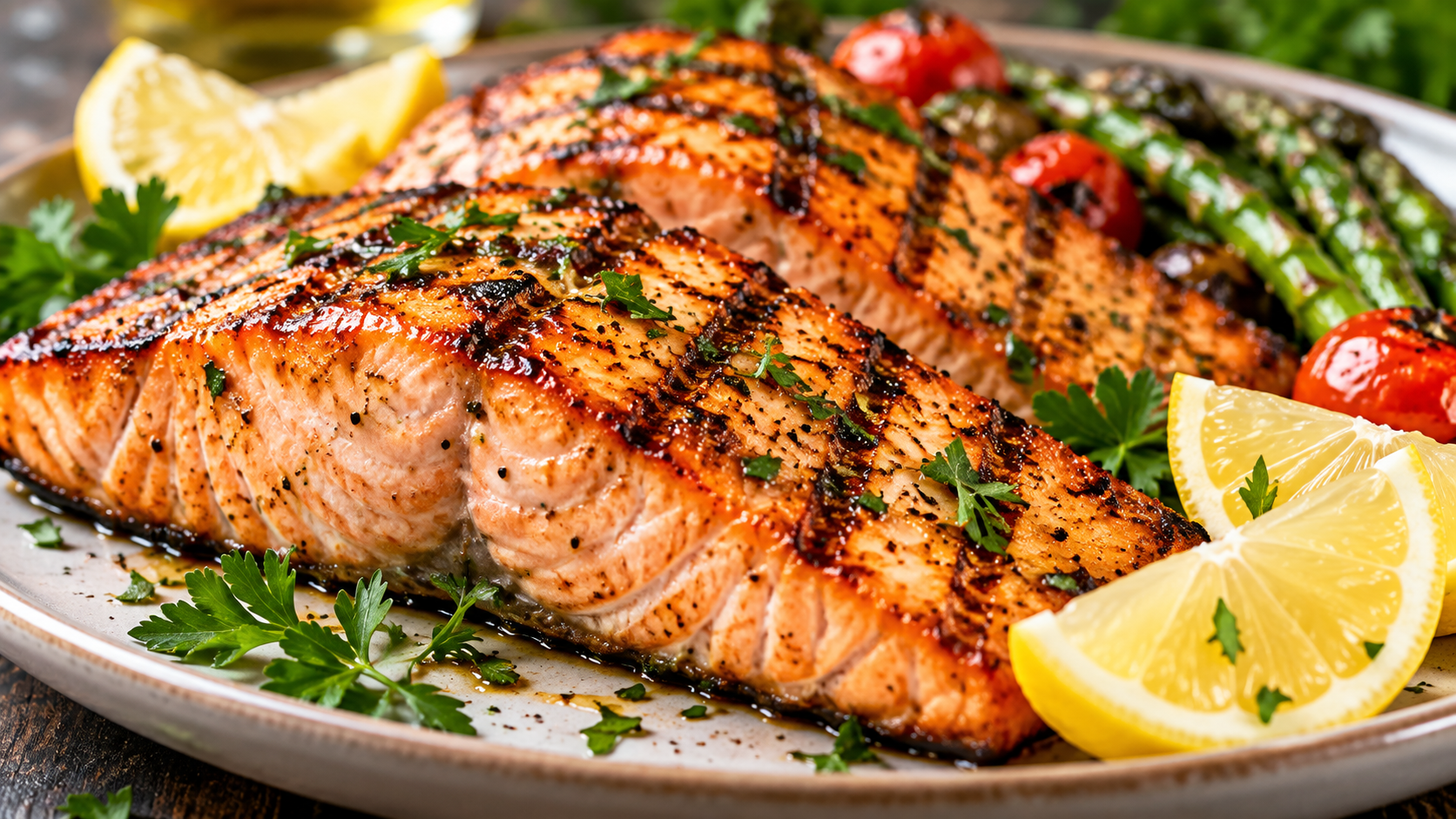
Grilled Salmon Recipe: Juicy, Flaky, and Perfectly Seasoned
Grilled salmon is one of those dinners that can feel special without requiring complicated preparation. A hot grill creates lightly charred edges while the salmon stays tender, moist, and flaky inside. With a simple combination of olive oil, garlic, lemon, paprika, salt, and black pepper, you can have a flavorful dinner on the table in about 20 minutes.
This grilled salmon recipe works especially well for weeknight dinners, summer cookouts, meal prep, or a simple dinner when you want something lighter without sacrificing flavor. The key is not to overcook the fish and to give the grill enough time to get properly hot before the salmon goes on.
Quick Recipe Overview
| Information | Details |
|---|---|
| Prep Time | 10 minutes |
| Cook Time | 8–12 minutes |
| Total Time | About 20 minutes |
| Servings | 4 |
| Cuisine | American-inspired |
| Course | Main Course |
| Difficulty | Easy |
| Cooking Method | Grilling |
Why You’ll Love This Recipe
- Quick and easy: The salmon needs only a short marinade or seasoning time before grilling.
- Tender and flavorful: Olive oil helps keep the fish moist while garlic, lemon, and spices add brightness.
- Great for outdoor grilling: Salmon develops deliciously browned edges over a hot grill.
- Easy to customize: You can make it spicy, smoky, herb-filled, or citrusy.
- Works with many sides: Serve it with vegetables, rice, potatoes, salad, or grains.
- Excellent for meal prep: Cooked salmon can be portioned into bowls, salads, or wraps.
- No complicated sauce required: A squeeze of fresh lemon is enough to finish the dish.
Ingredients
Main Ingredients
| Ingredient | Amount | Purpose / Notes |
|---|---|---|
| Salmon fillets | 4 fillets, about 6 oz each | Skin-on or skinless |
| Olive oil | 2 tablespoons | Helps prevent sticking and adds richness |
| Fresh lemon juice | 1 tablespoon | Adds brightness |
| Garlic | 2 cloves, minced | Provides savory flavor |
| Paprika | 1 teaspoon | Adds mild warmth and color |
| Kosher salt | ¾ teaspoon | Seasons the salmon |
| Black pepper | ½ teaspoon | Adds mild spice |
| Dried oregano | ½ teaspoon | Adds herbal flavor |
Garnish
- 1 lemon, cut into wedges
- 1 tablespoon chopped fresh parsley
- Optional: thinly sliced green onions
Optional Ingredients
For additional flavor, you can add:
- ½ teaspoon garlic powder
- ¼ teaspoon cayenne pepper
- 1 teaspoon honey
- ½ teaspoon smoked paprika
- 1 teaspoon Dijon mustard
Choosing the Right Salmon
Several varieties of salmon work well on the grill. Atlantic salmon is widely available and tends to have a rich, buttery texture. Sockeye salmon has a deeper color and more pronounced flavor but is often leaner, so it can cook more quickly.
When buying salmon, look for fillets that appear moist and firm rather than dry or discolored. If possible, choose pieces with a relatively even thickness so they cook at a similar rate.
Skin-on salmon is particularly convenient for grilling because the skin can help protect the flesh from direct heat and makes the fillet easier to handle.
Ingredient Substitutions
| Original Ingredient | Substitute | How It Changes the Recipe |
|---|---|---|
| Olive oil | Avocado oil | Similar neutral richness and suitable for grilling |
| Lemon juice | Lime juice | Gives the salmon a sharper citrus flavor |
| Fresh garlic | ½ teaspoon garlic powder | Slightly less fresh but convenient |
| Oregano | Italian seasoning | Adds a broader herb flavor |
| Paprika | Smoked paprika | Creates a deeper smoky flavor |
| Parsley | Cilantro | Adds a brighter, more pronounced herbal note |
| Honey | Maple syrup | Adds a slightly different sweetness |
If using honey or maple syrup, watch the grill closely because sweet ingredients can brown quickly over high heat.
Equipment You’ll Need
- Outdoor grill or grill pan
- Tongs
- Small mixing bowl
- Measuring spoons
- Paper towels
- Instant-read thermometer
- Grill brush for cleaning the grates
- Silicone brush or spoon for applying the seasoning mixture
A grill basket is optional, especially if you’re worried about delicate fillets sticking or breaking.
Step-by-Step Instructions
1. Prepare the Salmon
Remove the salmon from its packaging and gently pat the fillets dry with paper towels.
Drying the surface is important because excess moisture can interfere with browning. You want the outside of the salmon relatively dry before adding the oil and seasoning.
Check the fillets for any remaining pin bones and remove them with clean tweezers or fish-bone pliers if necessary.
2. Make the Seasoning Mixture
In a small bowl, combine:
- Olive oil
- Lemon juice
- Minced garlic
- Paprika
- Kosher salt
- Black pepper
- Dried oregano
Stir until the mixture is evenly combined.
If you’re using honey, Dijon mustard, smoked paprika, or cayenne, add them at this stage.
3. Season the Salmon
Brush the seasoning mixture evenly over the salmon.
If you’re using skin-on fillets, concentrate most of the seasoning on the flesh side. A light coating of oil on the skin can help it make better contact with the grill.
You don’t need to marinate salmon for hours. A short rest of about 10–15 minutes is sufficient for this simple seasoning mixture.
Avoid leaving salmon in an acidic marinade for an excessively long period because the lemon juice can begin changing the texture of the surface.
4. Preheat the Grill
Preheat your grill to medium-high heat, roughly 400–450°F.
Clean the grill grates and lightly oil them if needed.
A properly preheated grill is one of the most important steps in preventing salmon from sticking. Putting fish onto a cold or poorly heated grill can make it more likely to adhere to the grates.
5. Place the Salmon on the Grill
Place the salmon on the grill, usually skin-side down if the fillets have skin.
Close the grill lid and allow the salmon to cook without constantly moving it.
For fillets around 1 inch thick, begin checking after about 4–5 minutes.
The exact cooking time will vary depending on the thickness of the salmon, grill temperature, and whether you’re cooking directly over the heat.
6. Flip Carefully if Needed
If you’re using skin-on salmon, you may be able to cook most or all of the fish without flipping it.
For skinless fillets, carefully loosen the salmon from the grill with a wide spatula or grill-safe turner before flipping.
If the fish resists strongly, give it another minute. Salmon often releases more easily once the surface has developed a good sear.
7. Check the Internal Temperature
Use an instant-read thermometer inserted into the thickest part of the fillet.
For food safety, salmon should reach an internal temperature of 145°F.
Because salmon continues cooking slightly after being removed from the grill, avoid relying on time alone. Thickness and grill temperature can make a substantial difference.
8. Rest the Salmon
Transfer the cooked salmon to a plate and let it rest for a few minutes.
Resting allows the juices to settle and gives the fish time to finish cooking gently.
Avoid covering it tightly with foil because trapped steam can soften a crisp exterior.
9. Finish With Lemon and Herbs
Just before serving, squeeze fresh lemon juice over the salmon.
Add chopped parsley or green onions if desired.
For extra richness, you can serve the salmon with a small spoonful of garlic butter, herb sauce, or yogurt-based lemon sauce.
Cooking Tips for Juicy Grilled Salmon
Start With a Hot Grill
A hot grill helps create browning quickly and reduces the amount of time the fish needs to remain over direct heat.
Don’t Keep Moving the Fish
Constantly turning or sliding salmon around the grill increases the chance of breaking the fillet.
Let the first side cook undisturbed until it develops a firm surface.
Pat the Salmon Dry
Surface moisture can create steam instead of browning. A quick pat with paper towels makes a noticeable difference.
Oil the Fish and Grill
A light coating of oil helps reduce sticking. Avoid using excessive oil because dripping oil can cause flare-ups.
Watch the Thickest Part
The thickest section of the fillet will take the longest to cook. Check the temperature there rather than at the thin tail end.
Don’t Rely Only on Cooking Time
Eight minutes may be enough for one fillet but insufficient for a much thicker piece. Use time as a guideline and temperature as your primary safety check.
Common Mistakes to Avoid
| Mistake | Why It Happens | How to Avoid It |
|---|---|---|
| Salmon sticks to the grill | Grill isn’t hot enough or fish is moved too soon | Preheat thoroughly and allow the fish to develop a seared surface |
| Salmon turns dry | It is cooked too long | Check the internal temperature and remove it when properly cooked |
| Fish breaks apart | Fillet is flipped too aggressively | Use a wide spatula and move it as little as possible |
| Weak flavor | Too little seasoning or uneven coverage | Coat the flesh evenly with the seasoning mixture |
| Burned exterior | Excessive heat or sugary marinade | Use medium-high heat and monitor sweet marinades carefully |
| Uneven cooking | Fillets have different thicknesses | Arrange thicker portions toward hotter areas or adjust cooking time individually |
| Skin becomes soggy | Skin wasn’t exposed to sufficient direct heat | Place skin-side down and allow it to cook undisturbed |
How to Tell When Grilled Salmon Is Done
The most reliable method is checking the internal temperature with an instant-read thermometer.
For food safety, the salmon should reach 145°F in the thickest part.
Other signs can help you judge doneness:
- The flesh changes from translucent to opaque.
- The salmon separates into flakes when gently pressed.
- The center feels firm but still moist.
- The surface develops light browning.
- The fish has a fresh, cooked aroma rather than a raw smell.
Color alone isn’t a perfect indicator because different salmon varieties naturally have different shades.
Cooking time is also only a guideline. A thin fillet may finish considerably sooner than a thick center-cut piece.
Flavor Variations
Garlic Herb Grilled Salmon
Increase the garlic and add fresh parsley, dill, or chives. Finish with lemon juice and a small amount of melted butter.
Smoky Grilled Salmon
Replace regular paprika with smoked paprika and add a small pinch of garlic powder. This version pairs particularly well with grilled vegetables and roasted potatoes.
Spicy Grilled Salmon
Add ¼ teaspoon of cayenne pepper or a pinch of crushed red pepper flakes to the seasoning mixture.
For more heat, serve with a spicy yogurt sauce or a drizzle of chili-lime sauce.
Honey Mustard Salmon
Add 1 teaspoon honey and 1 teaspoon Dijon mustard to the seasoning mixture. Brush the mixture lightly over the salmon before grilling.
Keep a close eye on the fish because the added sugars can brown faster.
Lemon Dill Salmon
Use fresh dill instead of oregano and increase the lemon flavor slightly. This variation works especially well with roasted potatoes, asparagus, or a crisp green salad.
Mediterranean-Style Salmon
Season with oregano, garlic, lemon, and black pepper. After grilling, add chopped parsley, tomatoes, cucumber, and a spoonful of tzatziki on the side.
Serving Suggestions
Grilled salmon is versatile enough to pair with simple vegetables or become the centerpiece of a complete grain bowl.
| Serve With | Why It Works |
|---|---|
| Roasted asparagus | Adds a tender, earthy vegetable component |
| Rice pilaf | Provides a mild base that absorbs the salmon’s juices |
| Roasted potatoes | Adds a hearty, crispy contrast |
| Green salad | Brings freshness and acidity |
| Grilled zucchini | Keeps the entire meal grill-friendly |
| Quinoa | Makes a filling grain-based meal |
| Coleslaw | Provides cool, crunchy texture |
| Corn on the cob | A natural pairing for summer grilling |
For presentation, place each salmon fillet on a plate with a lemon wedge, fresh herbs, and a colorful vegetable side.
Storage
Allow leftover salmon to cool and place it in an airtight container.
Refrigerate it promptly and use refrigerated leftovers within 3–4 days.
For the best texture, store salmon separately from salads, sauces, or crunchy toppings.
Cooked salmon can also be frozen. Wrap individual portions tightly and place them in a freezer-safe container or bag. Use within a reasonable period for the best quality and thaw safely in the refrigerator before reheating.
How to Reheat Grilled Salmon
The biggest challenge when reheating salmon is preventing it from becoming dry.
Oven
Place the salmon in a baking dish and add a small splash of water or broth. Cover loosely and warm at around 275°F until heated through.
This gentle method helps reduce moisture loss.
Stovetop
Place the salmon in a covered skillet with a tablespoon or two of water. Heat over low to medium-low heat until warmed.
Avoid high heat, which can quickly dry out the fish.
Microwave
Use a microwave-safe dish and cover the salmon loosely. Heat in short intervals at reduced power.
Check between intervals rather than heating it continuously.
Air Fryer
An air fryer can work for salmon, but the high circulating heat can dry leftovers quickly. Use a moderate temperature and check frequently.
For best results, reheating gently is generally preferable when the goal is to preserve moisture.
Make-Ahead Instructions
You can prepare the seasoning mixture several hours ahead and refrigerate it in a covered container.
The salmon can also be cleaned, portioned, and seasoned shortly before cooking.
For the best texture, grilling the salmon close to serving time is preferable. Cooked salmon can be stored, but freshly grilled salmon will generally have a better surface texture.
Meal Prep Tips
Grilled salmon works well for meal prep when portioned properly.
Divide cooked salmon into individual containers with:
- Rice or quinoa
- Roasted vegetables
- Fresh greens
- Lemon wedges
- A separate sauce or dressing
Keep fresh toppings and sauces separate until serving.
For reheating, use gentle heat and avoid repeatedly reheating the same portion. Salmon is also excellent cold or at room temperature in salads and grain bowls.
Nutrition Information
The following is an approximate estimate for one 6-ounce salmon fillet prepared with the ingredients above. Actual values will vary depending on the salmon variety, exact portion size, and amount of oil absorbed.
| Nutrition | Approximate Amount |
|---|---|
| Calories | 390–450 |
| Protein | 38–42 g |
| Carbohydrates | 2–4 g |
| Fat | 24–29 g |
| Fiber | Less than 1 g |
| Sugar | 1–2 g |
| Sodium | 500–650 mg |
These figures are estimates rather than laboratory-tested nutrition data.
Frequently Asked Questions
Should I grill salmon with the skin on?
Yes. Skin-on salmon is often easier to grill because the skin provides a protective layer between the flesh and the grill grates. It can also help the fillet hold together during cooking.
Do I need to flip salmon on the grill?
Not necessarily. Skin-on salmon can often be cooked primarily on the skin side with the grill lid closed. Skinless salmon may benefit from careful flipping, depending on the grill setup and desired browning.
How long does salmon take to grill?
A salmon fillet around 1 inch thick may take approximately 8–12 minutes at medium-high heat, but the exact time varies considerably. Thickness, grill temperature, and salmon variety all affect cooking time.
Use an instant-read thermometer rather than relying solely on the clock.
What temperature should grilled salmon reach?
For food safety, salmon should reach an internal temperature of 145°F in the thickest part of the fillet.
Why does my salmon stick to the grill?
Common causes include insufficiently preheated grates, inadequate oil, or attempting to move the salmon before it has developed a seared surface.
Preheat the grill thoroughly, lightly oil the fish or grates, and give the salmon time to release naturally.
Can I use frozen salmon?
Yes. Frozen salmon can be used, but thaw it safely in the refrigerator before grilling when possible. Pat the thawed fillets thoroughly dry before seasoning.
Can I grill salmon without oil?
You can, but a small amount of oil helps with browning, flavor, and sticking. If you want to minimize oil, use a very small amount and make sure the grill grates are clean and properly heated.
Can I use a grill pan instead of an outdoor grill?
Absolutely. A heavy grill pan can provide grill marks and browning indoors. Preheat it thoroughly and avoid overcrowding the pan.
What should I serve with grilled salmon?
Good options include roasted potatoes, asparagus, rice, quinoa, green salad, grilled vegetables, corn, or coleslaw. Choose sides with contrasting textures and some acidity to balance the richness of the salmon.
Troubleshooting
| Problem | Possible Cause | Solution |
|---|---|---|
| Salmon is dry | Overcooking | Check temperature earlier and avoid cooking well beyond the recommended temperature |
| Salmon sticks | Grill wasn’t properly heated | Preheat the grill and lightly oil the cooking surface |
| Salmon falls apart | Fillet is delicate or flipped too early | Let it develop a crust before moving it |
| Outside burns before inside cooks | Heat is too high | Reduce the heat and move the salmon to a cooler area |
| Flavor is bland | Uneven or insufficient seasoning | Season the flesh evenly and finish with fresh lemon |
| Skin isn’t crisp | Excess moisture or insufficient heat | Pat the skin dry and cook skin-side down over appropriate heat |
| Salmon is undercooked | Fillet is unusually thick | Continue cooking and check the thickest portion with a thermometer |
Recipe Card
Recipe Name: Grilled Salmon
Prep Time: 10 minutes
Cook Time: 8–12 minutes
Total Time: About 20 minutes
Servings: 4
Calories per serving: Approximately 390–450
Ingredients
- 4 salmon fillets, about 6 ounces each
- 2 tablespoons olive oil
- 1 tablespoon fresh lemon juice
- 2 cloves garlic, minced
- 1 teaspoon paprika
- ¾ teaspoon kosher salt
- ½ teaspoon black pepper
- ½ teaspoon dried oregano
- Lemon wedges, for serving
- Fresh parsley, for garnish
Instructions
- Pat the salmon dry with paper towels and check for pin bones.
- Mix olive oil, lemon juice, garlic, paprika, salt, pepper, and oregano.
- Brush the seasoning mixture evenly over the salmon and let it rest for about 10–15 minutes.
- Preheat the grill to approximately 400–450°F and clean the grates.
- Place the salmon on the grill, skin-side down if using skin-on fillets.
- Grill for approximately 8–12 minutes, depending on thickness, checking the thickest part with an instant-read thermometer.
- Cook until the salmon reaches 145°F for food safety.
- Transfer to a plate and rest for a few minutes.
- Finish with fresh lemon juice and parsley before serving.
Storage: Refrigerate leftovers in an airtight container and use within 3–4 days.
Reheating: Reheat gently in a low oven, covered skillet, or reduced-power microwave to help retain moisture.
SEO Information
Primary Keyword: grilled salmon recipe
Secondary Keywords:
- easy grilled salmon
- how to grill salmon
- grilled salmon fillets
- juicy grilled salmon
- salmon on the grill
- easy salmon dinner
- grilled salmon seasoning
- how long to grill salmon
SEO Title: Easy Grilled Salmon Recipe for Juicy, Flaky Fillets
Meta Description: Make juicy grilled salmon with garlic, lemon, and paprika in about 20 minutes. Get easy grilling tips, substitutions, sides, storage, and reheating advice.
URL Slug: grilled-salmon-recipe
Image SEO
Featured Image Alt Text:
Juicy grilled salmon fillet with lemon wedges and fresh parsley on a serving plate
Featured Image File Name:
grilled-salmon-recipe.jpg
Suggested Image Caption:
Juicy grilled salmon seasoned with garlic, paprika, lemon, and herbs.
Additional Recipe Images
- Raw seasoned salmon before grilling
Alt text: Seasoned salmon fillets ready to grill with garlic, paprika, lemon, and herbs - Salmon cooking on the grill
Alt text: Salmon fillet grilling skin-side down on a hot outdoor grill - Close-up of finished grilled salmon
Alt text: Close-up of flaky grilled salmon with browned edges and fresh herbs - Grilled salmon with side dishes
Alt text: Grilled salmon served with roasted vegetables, lemon, and rice - Salmon meal-prep bowl
Alt text: Grilled salmon with quinoa, roasted vegetables, greens, and lemon
Internal Content Opportunities
- How to Choose Fresh Salmon at the Grocery Store
- Best Seasonings for Grilled Fish
- How to Cook Salmon Without Drying It Out
- Easy Lemon Garlic Butter Sauce
- Best Side Dishes for Salmon
- How to Store and Reheat Cooked Salmon
- Grilled Vegetable Recipes for Summer
- Easy High-Protein Dinner Ideas
- Salmon Rice Bowl Recipe
- Lemon Dill Sauce for Fish